
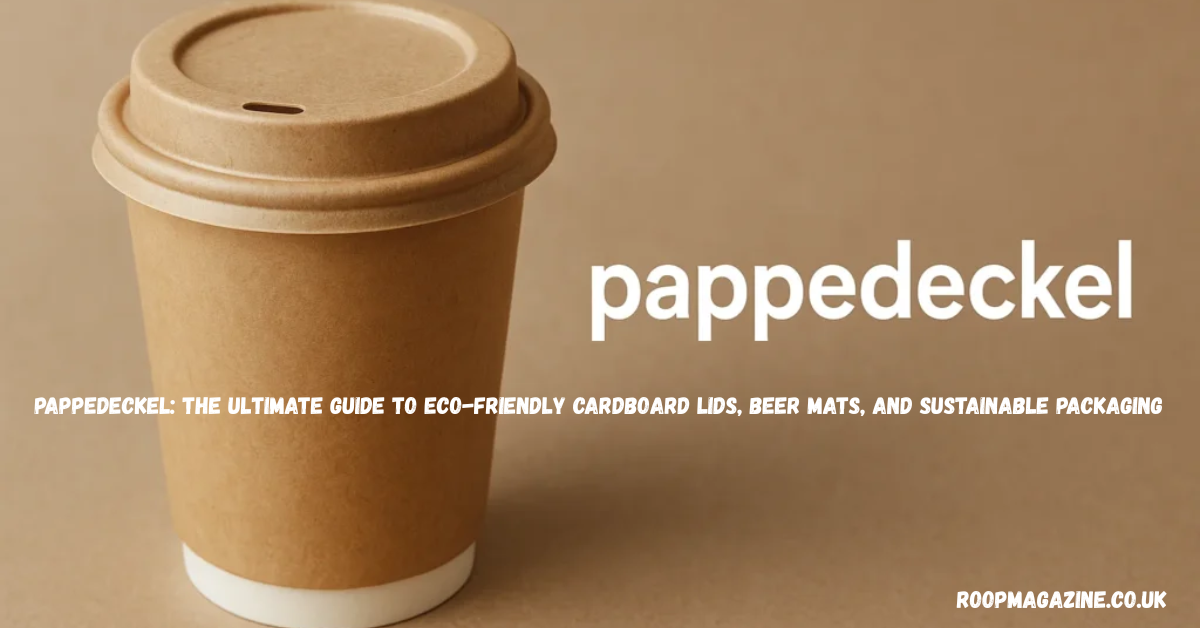
In an era where sustainability is rapidly reshaping consumer expectations and business operations, even the smallest items can make a big difference. One such unassuming object gaining global attention is the Pappedeckel — a simple cardboard lid or coaster that bridges traditional utility with modern environmental values. Whether used under a cup of coffee, as a beer mat in a Bavarian beer garden, or as a biodegradable lid for takeaway food, the Pappedeckel represents a quiet revolution in sustainable packaging.
In this extensive guide, we’ll explore its origins, cultural importance, environmental impact, manufacturing process, practical applications, business uses, and future trends — everything you need to know to understand why this tiny piece of cardboard matters more than ever.
What is a Pappedeckel?
The term Pappedeckel is a compound German word — with “Pappe” meaning cardboard and “Deckel” meaning lid. At its core, a Pappedeckel is a cardboard or paperboard lid, cover, or flat disc used in various settings ranging from beverages to packaging.
Originally, the Pappedeckel was created to cover drinks and food containers, but the term now broadly includes:
- Disposable cardboard lids for coffee cups and takeout meals
- Coasters or beer mats placed under glasses in pubs
- Protective covers or separators in shipping and packaging
- Decorative or marketing surfaces printed with logos and messages
Unlike ordinary paper, Pappedeckel is typically made using compressed, multi-layered paperboard that offers enough rigidity to serve multiple functions while remaining lightweight and eco-friendly.
Historical Background and Cultural Significance
Origins in Germany and Early Uses
The story of the Pappedeckel begins in Germany and Central Europe, where cardboard coasters and lids became practical tools in cafes, breweries, and street food culture. Early uses were simple — protect tables from moisture and spills — but over time the object became ingrained in everyday life.
In traditional German beer gardens and pubs, Pappedeckel often serve as beer mats that protect wooden tables and catch condensation from cold brews. Over time, they became ideal canvases for brewery logos and artwork, turning a practical item into a cultural artifact.
Social Traditions and Signaling
In some regions, the placement of a Pappedeckel carries social meaning. For instance, placing a coaster on top of your beer glass in a beer garden signaled to staff that you were not finished with your drink but had stepped away momentarily. Such subtle customs reflect the object’s integration into local etiquette and hospitality practices.
Today, Pappedeckel remains a symbol of everyday practicality and heritage — from classic beer halls in Bavaria to modern cafés in Berlin and Vienna.
Common Applications of Pappedeckel
In Cafés and Coffee Shops
In coffee culture, especially in Europe, Pappedeckel serves as:
- A spill-prevention cover for takeaway drinks
- A way to retain some heat in hot beverages
- A branding surface for café logos, seasonal artwork, or slogans
- An alternative to plastic lids — especially where sustainability is a priority
The printed surface turns this tiny lid into a marketing asset, helping brands communicate values and connect with customers on an interactive level.
In Bars, Restaurants, and Breweries
In hospitality settings, particularly beer gardens and traditional pubs:
- Pappedeckel acts as classic beer coasters, protecting surfaces and adding character
- They absorb moisture from cold drinks
- They serve as informal messaging surfaces — for example, as makeshift note pads, game counters, or subtle signals to staff
- Customized coasters often depict local art or regional humor, becoming collectibles for enthusiasts
Whether printed with artwork or brand logos, such designs help embed establishments in local culture.
In Takeaway and Food Packaging
Beyond beverages, Pappedeckel is now widely used to:
- Cover soup containers, salads, and desserts
- Wrap small food boxes or trays for takeaway
- Act as protective lids in street food service
Their low cost, recyclability, and ease of use make them ideal for bakeries, food trucks, and festival caterers alike.
Retail, Industrial, and B2B Uses
Pappedeckel’s utility isn’t limited to food and beverage:
- In retail, they may act as inner covers for gift boxes or cosmetic jars
- Industrial uses include box separators or simple protective boards
- Businesses increasingly adopt cardboard lids in packaging lines to replace plastics where feasible
Materials and Manufacturing Process
What Are Pappedeckel Made Of?
Traditionally, Pappedeckel is made from:
- Multi-layered paperboard or compressed cellulose fiber
- Recycled paper fibers or virgin kraft pulp
- Optional water-resistant or compostable coatings (like plant-based waxes or starches) to improve performance in moist environments
Thickness typically ranges from around 0.5 mm to 3 mm depending on use — thin for coffee lids, thicker for sturdy coasters.
Step-by-Step Manufacturing
- Pulp Preparation: Wood pulp and/or recycled fibers are mixed into a slurry.
- Sheet Forming: The pulp is pressed and dried into high-strength paperboard sheets.
- Cutting and Shaping: Die-cutting machinery shapes the sheets into circular or custom designs.
- Surface Treatment: Coatings or prints are added as needed; food-safe inks are common for branding.
- Packaging and Distribution: Finished pieces are stacked and shipped, often using recyclable packaging.
Modern manufacturing seeks to reduce waste by using closed-loop water systems and eco-friendly inks, aligning the process itself with sustainability goals.
Environmental and Sustainability Benefits
One of the primary drivers behind Pappedeckel’s growing popularity is its positive environmental profile, especially when compared with traditional plastic lids.
Biodegradable and Compostable
Pappedeckel made from untreated or plant-coated cardboard decomposes naturally within weeks or months in industrial compost facilities — a stark contrast to plastic lids that can persist for centuries.
Recyclable and Renewable
Cardboard is one of the most widely accepted recycling materials globally. In many developed regions, 70% or more of cardboard waste is recycled compared to the much lower global plastic recycling rates, which remain under 15% in many areas.
Many Pappedeckel products use FSC-certified wood pulp, ensuring the raw material comes from responsibly managed forests.
Reduced Carbon Footprint
Lifecycle analyses show that cardboard lids often produce 60–70% lower carbon emissions than their plastic counterparts due to lower energy requirements in production and transport, and higher end-of-life reutilization rates.
Plastic Waste Reduction
By switching from plastic covers to cardboard, businesses can prevent thousands of pieces of non-biodegradable waste from accumulating in landfills and oceans — helping tackle one of the most pressing environmental challenges of the 21st century.
Branding, Customization, and Marketing Opportunities
While functional, Pappedeckel also offers powerful branding potential. Its wide surface and tactile nature make it ideal for creative messaging:
- Logo placement and brand slogans
- Seasonal designs and limited-edition artwork
- QR codes linking to digital menus or promotions
- Sustainability messages that reinforce a company’s eco mission
This transforms a simple cardboard lid into a brand touchpoint, engaging customers subtly but effectively.
Custom printing often uses soy-based or algae-based inks to maintain eco-friendliness while delivering vibrant designs.
FAQs
1. What exactly is a Pappedeckel?
A Pappedeckel is a cardboard or paperboard lid used primarily in food and beverage packaging. It can serve as a disposable cover for coffee cups, soup containers, or as a coaster/beer mat in pubs and restaurants.
2. Is a Pappedeckel biodegradable?
Yes. Most Pappedeckel products are made from biodegradable paperboard or cardboard. If they have compostable coatings, they can break down quickly in industrial composting facilities.
3. How is a Pappedeckel better than a plastic lid?
Pappedeckel is:
- Made from renewable resources
- Biodegradable and recyclable
- Free from petroleum-based plastics
- Better aligned with global sustainability goals
4. Can Pappedeckel resist water and heat?
Yes, many Pappedeckel lids are treated with food-safe coatings to resist steam, grease, and liquid, making them suitable for hot drinks, soups, and cold beverages alike.
5. What are the main uses of Pappedeckel?
- Lids for coffee, soup, and dessert containers
- Beer mats or coasters in bars and breweries
- Protective packaging in retail and industrial settings
- DIY and craft projects
6. Can Pappedeckel be recycled?
Yes. Most cardboard Pappedeckel can be recycled in paper recycling bins. Avoid recycling versions coated with plastic or foil layers.
7. Are Pappedeckel customizable for branding?
Absolutely. They can be printed with logos, messages, seasonal designs, embossed textures, QR codes, or other marketing elements, making them a versatile branding tool.
8. How much does a Pappedeckel cost compared to plastic lids?
On average, Pappedeckel costs 5–15% more than plastic lids. Specialty materials or custom printing may increase the cost, but the long-term environmental and branding benefits often outweigh the price difference.
9. Which industries use Pappedeckel the most?
- Food and beverage (cafes, coffee chains, bakeries, yogurt brands)
- Breweries and restaurants (as coasters and beer mats)
- Retail and consumer packaging (cosmetics, gift boxes, specialty products)
- Industrial and B2B packaging
10. What is the future of Pappedeckel?
The Pappedeckel market is evolving with:
- 100% compostable coatings
- Reinforced fiber technology for durability
- Smart packaging integration with digital interactivity
- Circular economy models for collection and recycling