
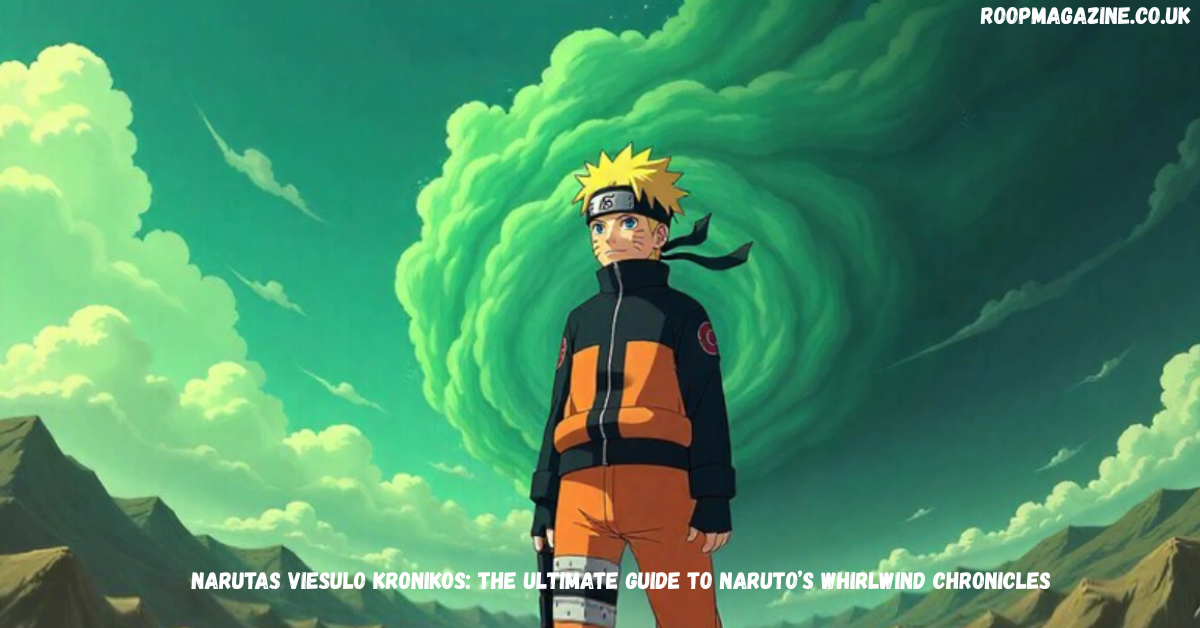
The phrase Narutas Viesulo Kronikos has ignited curiosity among anime fans, storytellers, and cultural commentators alike. At first glance, it sounds like a cryptic title — but at its core, it reflects a deeply symbolic, narrative-rich interpretation of one of the most influential anime franchises ever created. Blending linguistic flair with mythic storytelling, Narutas Viesulo Kronikos — loosely translating to “Naruto’s Whirlwind Chronicles” — serves as both a cultural reinterpretation and a conceptual lens for understanding personal growth, emotional struggle, and narrative transformation.
In this comprehensive guide, we explore what Narutas Viesulo Kronikos means, how it relates to Naruto’s core themes, why it resonates across cultures, and how it can be applied as a storytelling philosophy beyond fiction.
Understanding Narutas Viesulo Kronikos
The literal components of the title break down into evocative symbolism: Narutas refers to the iconic character Naruto (adapted linguistically, possibly into a European or Baltic phonetic variant), Viesulo evokes a storm or whirlwind, and Kronikos signifies a chronicle — a recorded journey through time and transformation.
Rather than being a single narrative arc, Narutas Viesulo Kronikos represents an overarching framework where each segment of the hero’s journey is framed like a chronicle of internal turbulence. This allows the concept to function simultaneously as a metaphor for personal development and a reinterpretation of the classic anime narrative structure.
At its heart, it tells us that life’s journey — much like Naruto’s — is a series of “storms” that forge, challenge, and ultimately define identity.
Origins and Creative Influences
From Manga to Mythic Narrative
Narutas Viesulo Kronikos draws inspiration from Masashi Kishimoto’s Naruto manga, which first serialized in Weekly Shonen Jump in 1999 and concluded in 2014, amassing over 250 million copies in circulation worldwide, making it one of the best-selling manga series of all time.
Since its anime adaptation in 2002, Naruto has captured the hearts of viewers across continents, reflected in its streaming resurgence decades later — for example, Naruto Shippuden consistently ranks high among streaming platforms, registering tens of millions of hours viewed globally in recent years.
Cultural Fusion
Unlike the original Japanese narrative, the term Narutas Viesulo Kronikos incorporates a linguistic aesthetic that could be tied to European languages — particularly Baltic or Lithuanian roots. This synthesis reflects how global fandoms reinterpret stories through local language, culture, and emotional frames, highlighting the universal appeal of Naruto’s core motifs.
This kind of adaptation — where mythic elements like winds and storms take symbolic precedence — echoes ancient hero myths from various cultures where natural forces represent internal struggle and spiritual transformation.
Core Themes and Symbolism
Identity Forged Through Chaos
At its core, Narutas Viesulo Kronikos places emphasis on personal transformation through adversity. Just as a whirlwind is chaotic, powerful, and ever-changing, the narrative suggests that true self-understanding arises not from calm, but from conflict.
In Naruto’s story, the title character is shaped not by comfort or privilege, but by hardship — from ostracization in his village to the battlefields of countless trials. Narutas Viesulo Kronikos reframes this struggle as a series of storms that teach, refine, and reveal character.
Balancing Power with Responsibility
Another key theme is the dual nature of strength. In both Naruto’s journey and the Narutas Viesulo Kronikos concept, power is neither inherently good nor bad — its value depends on how it is wielded. A whirlwind can destroy or cleanse; similarly, internal forces like anger or ambition can harm or propel depending on one’s agency and self-reflection.
This duality reflects deeper lessons in emotional intelligence, where managing inner turbulence leads to growth rather than collapse.
Memory, Legacy, and Narrative Continuity
Because the idea is presented as chronicles, memories and past decisions aren’t discarded but carried forward. Each chapter — each “storm” — informs the next, reinforcing the idea that personal history is an integral part of ongoing growth.
This emphasis on continuity mirrors Naruto’s own extended universe, where legacy is literal — seen in the stories of Naruto’s mentors, predecessors, friends, and even his children in the sequel series Boruto.
Narrative Structure and Storytelling
The structure suggested by Narutas Viesulo Kronikos is episodic yet unified, allowing each segment to stand alone while contributing to a holistic emotional and philosophical journey. This mirrors the design of long-form anime and epic mythologies where each arc presents unique challenges but serves a larger overarching purpose.
This format supports multiple entry points for audiences: one reader may deeply connect with episodes that reflect emotional turbulence, while another may appreciate the broad progression of the hero’s transformation.
Artistic and Cultural Interpretation
Visual and Emotional Aesthetics
If Narutas Viesulo Kronikos were visualized — whether in fan art, animation, or reinterpretation — its aesthetics might differ significantly from the original Japanese anime style. Instead of hyper-dynamic battles and intense color palettes, a narrative inspired by whirlwinds and inner storms might employ softer visuals during introspective moments and contrast them with chaotic imagery during conflict.
Musically, one could imagine fused soundtracks blending traditional Japanese instruments with European orchestral elements — creating an emotional landscape that stretches beyond Japanese anime conventions and resonates with broader cultural influences.
Character Analysis in Narutas Viesulo Kronikos
Though Narutas Viesulo Kronikos is a conceptual framework, it naturally centers on key characters whose personal storms mirror the themes of transformation and resilience.
Naruto Uzumaki: Embodying the Storm Within
Naruto’s journey — from a lonely orphan to the leader of his village — encapsulates the idea of mastering internal chaos. His transformation from emotional tumult to disciplined strength aligns perfectly with the metaphor of a whirlwind that teaches as much as it tests.
Sasuke Uchiha: Conflict and Redemption
Sasuke’s narrative is marked by internal storms of vengeance, identity struggle, and eventual reconciliation. His arc reflects the destructive potential of unresolved chaos — and the possibility of finding purpose beyond it.
Sakura Haruno: Growth Through Introspection
Sakura’s evolution — from uncertainty and dependence to confidence and capability — exemplifies how inner storms can lead to self-empowerment and clarity.
Kakashi Hatake: Wisdom Born of Loss
As a mentor figure shaped by profound personal loss, Kakashi reinforces the notion that emotional turbulence does not weaken, but enriches, the narrative of growth.
Gaara: From Isolation to Leadership
Gaara’s early life mirrors a literal internal storm — a character consumed by chaos — and his transformation into a respected leader underscores the thematic core of chaos becoming a source of strength when understood and guided.
Cultural and Emotional Impact
The enduring popularity of Naruto and its reinterpretations like Narutas Viesulo Kronikos lies in their relatability across demographics and cultures. Naruto’s themes of friendship, resilience, and overcoming adversity resonate universally, which is why the franchise still ranks among the most watched anime globally — decades after its conclusion.
In Europe, anime fandom is robust, and projects like theme parks and translated adaptations help bridge cultural gaps, allowing local audiences to connect with the story on a deeper level. For example, Naruto-themed events and exhibitions in France and Germany continue to attract thousands of fans yearly, reflecting ongoing engagement with the series’ world and values.
Lessons Beyond Fiction
While framed as a narrative concept, Narutas Viesulo Kronikos offers practical philosophical insights:
Growth Requires Patience
Personal development isn’t instantaneous — it is iterative, often uncomfortable, and best understood as moving with the storm, not away from it.
Emotional Turbulence Is Not a Barrier
Instead of suppressing internal conflict, Narutas Viesulo Kronikos encourages acknowledging and integrating it into one’s journey.
Balance Over Suppression
Mastery isn’t about eliminating chaos, but about finding equilibrium within it — a lesson that resonates deeply in leadership, creativity, and emotional intelligence.
Modern Relevance and Interpretations
Narutas Viesulo Kronikos can be applied metaphorically to real-world challenges:
- Leadership: Navigating organizational challenges with agility and self-awareness.
- Creative Pursuits: Embracing uncertainty as part of the artistic process.
- Personal Growth: Understanding setbacks as part of an ongoing narrative arc rather than endpoints.
By reframing life’s difficulties as narrative storms, the concept provides a constructive lens for facing complexity with resilience and purpose.
Conclusion
Narutas Viesulo Kronikos is more than a reinterpretation of Naruto’s story — it is a symbolic storytelling philosophy. Through its core metaphors of whirlwinds and chronicles, it captures universal truths about growth, self-discovery, and resilience. As Naruto continues to inspire audiences around the world — from millions of manga sales to tens of millions of viewed hours on digital platforms — the idea of navigating life’s storms remains as relevant as ever.
This guide has explored its linguistic roots, symbolic depth, narrative structure, character resonance, and practical wisdom. For anyone navigating personal or creative challenges, the lessons behind Narutas Viesulo Kronikos offer reassurance, insight, and motivation to face life’s storms with clarity and purpose.
FAQs
What does Narutas Viesulo Kronikos mean?
It loosely translates to “Naruto’s Whirlwind Chronicles,” representing a narrative of growth shaped by inner storms and transformation.
Is it a single story or a concept?
It’s a broader narrative framework rather than a fixed plot, allowing for multiple interpretations and adaptations.
Why is the whirlwind an important symbol?
It represents inner conflict, change, and emotional turbulence that shape identity over time.
Who can relate to Narutas Viesulo Kronikos?
Anyone experiencing personal growth, struggle, or transformation can find meaning in its themes.
What is the main takeaway from the chronicles?
True strength comes from understanding and guiding internal chaos, not denying or suppressing it.