In 2026, businesses face an unprecedented challenge: too much data and too many disconnected systems. From accounting to inventory to HR, companies have traditionally relied on multiple tools, spreadsheets, and platforms that don’t communicate. This fragmentation leads to costly errors, delayed decisions, and lost opportunities—especially for small to medium‑sized enterprises (SMEs) striving to scale efficiently.
Erpoz ERP software is emerging as a next‑generation solution that replaces fragmented tools with a unified, real-time, cloud-native platform designed to centralize operations, automate workflows, and provide live insights. Built for the digital era, Erpoz enables businesses to gain a single source of truth across functions—transforming confusion into clarity.
This guide explores the origins, core features, business applications, competitive advantages, implementation strategies, and future trajectory of Erpoz—offering the most comprehensive look at this transformative platform.
The Origins of Erpoz
Historical Industrial Roots
The term “Erpoz” isn’t just a modern software name—it has historical industrial references that predate enterprise computing. Originally appearing in machinery and hydraulic components, particularly in mid‑20th-century industrial systems, Erpoz was associated with precision engineering where reliability and zero loss were paramount. This heritage resonates conceptually with Erpoz ERP, which aims for zero data ambiguity and absolute operational precision.
Transition to Digital Business Systems
As businesses digitized, the need for integrated systems grew. Traditional Enterprise Resource Planning (ERP) platforms sought to unify functions like finance and logistics, but often required complex setups and high costs. In contrast, Erpoz as a name and concept was revitalized in the 2020s to represent modern enterprise solutions that are cloud-native, scalable, and user-friendly.
This transition reflects a shift from bulky, siloed systems to platforms that support real-time visibility and unified data access across the organization.
What Is Erpoz in Modern ERP Context
Erpoz is a cloud-based Enterprise Resource Planning (ERP) system designed to centralize and streamline core business functions. Instead of managing finance, sales, inventory, and HR through separate tools, Erpoz brings all these capabilities into one synchronized system.
The platform is especially well suited for small to mid-sized businesses that have outgrown manual processes (like spreadsheets) but aren’t ready for expensive, complex enterprise software.
Key attributes of Erpoz include:
- Cloud-native access from anywhere
- Integrated modules for core functions
- Real-time updates and automation
- Scalable architecture that grows with the business
Core Features of Erpoz ERP Software
Erpoz’s design prioritizes practical business needs and user experience. Its core modules automate traditionally manual tasks and unify departments for better visibility and control.
Accounting and Financial Management
Erpoz automates financial operations including accounts payable and receivable, invoicing, expense tracking, and reporting. By tying financial records directly to operational transactions, the platform eliminates manual journal entries and reduces risk of errors that occur when data is entered in multiple places.
Benefits include:
- Automated financial reporting
- Real-time cash flow analysis
- Seamless link between sales, inventory, and accounting
Inventory and Supply Chain Management
Inventory control is one of Erpoz’s most powerful features. Real-time tracking ensures that stock levels reflect actual availability across locations, with automated reorder alerts and supplier coordination. This helps businesses minimize both stockouts and excess inventory—an essential capability given that inventory carrying costs can represent a significant portion of operating expenses in many sectors.
Tasks like receiving goods, tracking serial numbers, and recording adjustments are all captured in a unified system, reducing discrepancies and improving planning accuracy.
Sales, CRM, and POS Integration
Erpoz unifies point-of-sale (POS) systems, customer relationship management (CRM), and sales order processing. When a sale is made, the system instantly updates inventory and financial records, and captures customer data for deeper insights.
Integrated CRM lets businesses track customer interactions, purchase histories, and preferences—supporting personalized services and loyalty initiatives that improve retention.
HR and Payroll Capabilities
Human resources workflows like time tracking, payroll processing, and attendance can be managed directly within Erpoz, reducing the need for separate HR software and ensuring accurate labor cost accounting.
Key advantages include:
- Automated payroll and tax compliance
- Time and attendance tracking
- Role-based access control
Analytics, Reporting, and Dashboards
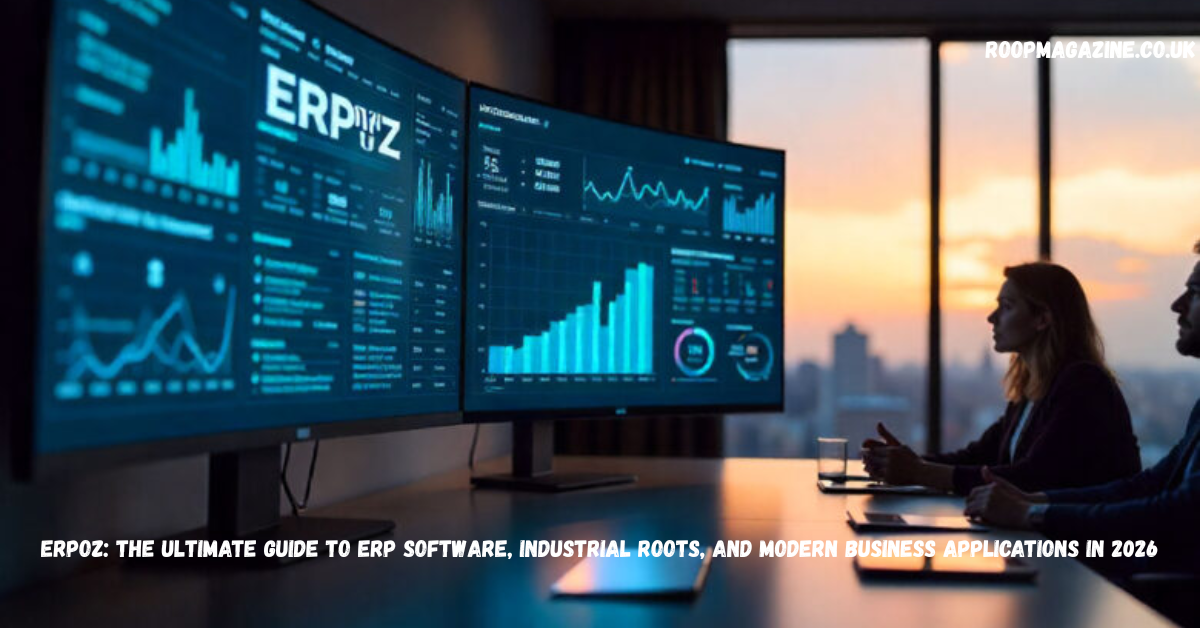
One of Erpoz’s standout features is real-time reporting. Instead of waiting for weekly or monthly spreadsheets, managers can view live dashboards with key performance indicators (KPIs), forecasts, and trend analysis.
Real-time analytics supports proactive decision-making—critical in fast-moving markets where delays can cost revenue.
The Erpoz Paradigm: Structure and Philosophy
While the name Erpoz is used by multiple vendors and articles, the conceptual framework often linked with modern ERP systems goes beyond software functionality—it represents a shift in how businesses think about data and operations.
The Immaculate Grid Concept
A key philosophical idea associated with advanced systems like Erpoz is the Immaculate Grid—a metaphor for perfect data alignment where each data point has a single, consistent position throughout the organization. Under this paradigm:
- No conflicting data sources exist
- All departments use the same version of truth
- Changes propagate instantly across functions
This framework reduces “data friction” and enables true real-time visibility across the enterprise—something that legacy ERP systems with batch updates struggle to deliver.
Security and Grid-Lock Protocol
Erpoz systems leverage advanced encryption and data protection measures to secure information across modules. This includes controlled access, audit trails, and compliance with key standards like GDPR or SOC 2—especially important for financial and customer data.
Such systems ensure that unauthorized access or data tampering is quickly detected and mitigated, protecting business continuity and trust.
Cultural and Organizational Impacts
Introducing Erpoz into a business often requires a cultural shift. Instead of fragmented operations and data silos, organizations adopt a mindset focused on transparency, accountability, and standardized workflows. Successful adoption can drive greater alignment across teams and reduce operational disputes.
Leadership roles like ERP champions or operations strategists help guide teams through this transition—ensuring the system supports both strategic decision-making and daily execution.
Industry Applications of Erpoz
Erpoz ERP software is versatile and adaptable across industries—from retail and hospitality to manufacturing and nonprofits.
Retail and eCommerce
Retail businesses benefit from real-time stock visibility, faster checkout through integrated POS, and customer data insights. Erpoz supports both online and in-store sales, syncing orders to inventory and accounting instantly.
Restaurants and Food Services
For restaurants, Erpoz tracks menu-level inventory, manages orders, and links sales to financial reporting. This improves accuracy and reduces waste—vital in low-margin industries.
Manufacturing and Wholesale Distribution
Manufacturers can use Erpoz to optimize production planning, track raw materials, and coordinate supply chain activities. Distributors benefit from multi-warehouse tracking, bulk order handling, and supplier performance reporting.
Healthcare and Compliance
Healthcare organizations often struggle with fragmented data across departments. An integrated ERP platform unifies patient records, billing, inventory (for supplies and medication), and reporting—improving accuracy and reducing errors.
Financial Services and FinTech
While highly regulated, financial services can use ERP systems like Erpoz for real-time compliance reporting, financial controls, and fraud detection workflows, leveraging unified data to reduce risk and improve auditability.
Erpoz vs. Other ERP Solutions
Erpoz is designed to strike a sweet spot between simplicity, scalability, and functionality—making it highly competitive with both legacy giants (SAP, Oracle) and other modern cloud ERP platforms (e.g., Zoho, Odoo).
Key differentiators include:
- Faster implementation and lower upfront cost
- Modular design with pay-as-you-grow capability
- User-friendly interfaces with minimal technical training required
- Real-time data integration without heavy custom coding
This makes Erpoz especially appealing for SMEs that need powerful ERP features without the complexity and cost of legacy systems.
Pricing and Implementation
Factors Affecting Cost
Erpoz pricing varies based on:
- Number of users
- Selected modules
- Level of customization
- Cloud vs. on-premise deployment
Cloud-native ERP software reduces hardware overhead and provides automatic updates—making it cost-effective for growing businesses.
Implementation Strategy
Successful ERP deployment requires a structured approach:
- Define business goals and requirements
- Clean and prepare existing data
- Train users across departments
- Deploy core modules first (e.g., finance, inventory)
- Expand functionality iteratively
Data preparation is particularly crucial: poor data quality can lead to inaccurate reports and delays. A well-managed rollout minimizes disruption while ensuring teams adopt the system properly.
Future of Erpoz: 2026 and Beyond
Semantic ERP and AI Integration
ERP systems are evolving toward cognitive automation—where AI helps interpret trends, predict outcomes, and recommend decisions. Future iterations of Erpoz aim to integrate intelligent analytics that augment human decision-making with predictive insights and automated optimization.
Personal ERP and LifeOS Concepts
Some platforms are experimenting with personal life management applications that use the same principles of unified data—helping individuals manage finances, health, and schedules in a single “LifeOS.” While not mainstream yet, this direction reflects broader trends in organizational productivity technology.
FAQs
1. What makes Erpoz different from other ERP software?
Erpoz combines real-time integration, cloud accessibility, and modular flexibility at a lower cost and complexity than many legacy ERP platforms.
2. Can Erpoz replace traditional ERP platforms like SAP or Oracle?
For SMEs and many mid-sized use cases, yes—especially where cost, speed of deployment, and usability are priorities.
3. How long does Erpoz implementation take?
For basic core modules, implementation can take a few weeks; full deployments with multiple modules may take a few months depending on customization and data migration needs.
4. Is Erpoz suitable for small businesses?
Yes—Erpoz is explicitly designed for small and medium businesses seeking enterprise-level features without enterprise complexity.
5. Can Erpoz integrate with existing software tools?
Most modern ERP systems support API integrations with tools like eCommerce platforms, communication apps, and legacy systems—enabling interoperability with existing stacks.
6. How secure is my data in Erpoz?
Cloud-native ERP platforms use encryption, controlled access, and compliance standards (e.g., GDPR) to protect data integrity and privacy.
7. What industries benefit most from Erpoz?
Retail, hospitality, manufacturing, distribution, healthcare, and service-based businesses all benefit from unified ERP systems.
Conclusion
In 2026, strategic clarity—not just data volume—is the competitive advantage. Erpoz ERP software transforms how businesses operate: eliminating silos, automating processes, and delivering real-time insights across departments. Its cloud-native architecture, modular scalability, and focus on unified data make it an attractive choice for SMEs and growing enterprises alike.
By consolidating disparate tools into a central system, reducing manual effort, and empowering data-driven decisions, Erpoz enables businesses to work smarter, faster, and more efficiently—positioning them to thrive in a rapidly evolving digital landscape.