
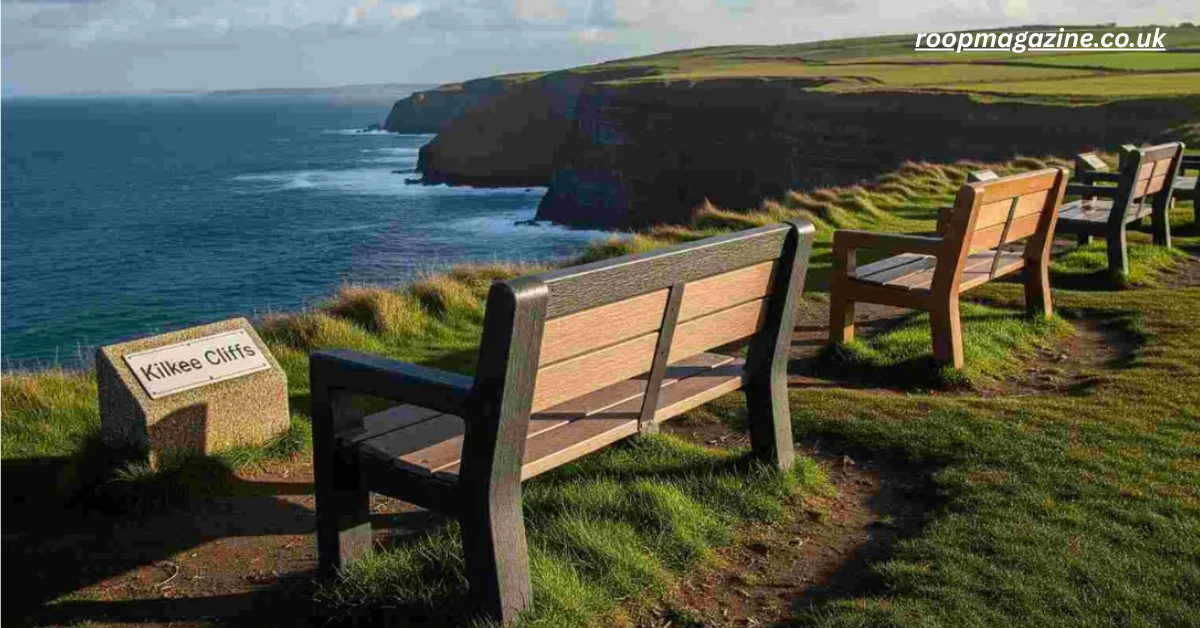
For many towns, public benches are simple pieces of street furniture — places to rest, socialise, or enjoy a sunset. But in Kilkee, a picturesque seaside town on the Wild Atlantic Way in County Clare, Ireland, benches have long meant more than just seats. Painted in vibrant blue and white, they symbolised local identity, community pride, and a distinctive coastal charm that generations of residents and visitors appreciated.
Yet in 2025, many of those beloved benches were replaced by plain brown benches made of recycled plastic — a move by Clare County Council that has ignited debate, nostalgia, and reflection across Kilkee and beyond. The change isn’t just about materials: it touches on safety, sustainability, heritage, community engagement, and the future of public infrastructure in heritage towns.
This article dives deep into the “Kilkee benches replaced plastic” story — recounting what was lost, what was gained, and the tensions that lie between practicality and identity.
A Seaside Icon: The Blue‑and‑White Benches of Kilkee
For decades, Kilkee’s blue-and-white wooden benches — painted in the colours of local GAA teams — weren’t just furniture: they were landmarks. Situated along the promenade, near the bandstand, at George’s Head and other scenic spots, these benches formed part of the town’s visual identity, blending heritage, sport, and seaside culture.
Families rested there after a brisk sea swim; elderly locals enjoyed the fresh Atlantic air; visitors snapped photos with the benches as backdrops. Over generations, the benches became woven into stories: childhood strolls, weekend holidays, and quiet contemplation by the waves.
Their colours — blue and white — weren’t arbitrary. They connected to local pride, heritage, and sporting identity. For many, the benches were as much a part of “Kilkee” as the cliffs, the coast, or its Victorian‑era charm.
In short: the benches were not just functional — they were emotional, cultural, symbolic.
Why Kilkee Replaced the Benches
Safety, Maintenance, and Coastal Wear
Coastal towns face harsh conditions. Wind, salt-laden air, rain, humidity, and changing weather all take a toll on wooden infrastructure. Over time, untreated wood weathers, corrodes, and becomes unsafe. According to local reports, a significant number of Kilkee’s traditional benches were removed because structural issues threatened public safety.
One resident — a regular visitor from Limerick — told local media that the old benches’ steel rods had expanded and caused breaks in the concrete base, making them unstable. Meanwhile, upkeep for wooden benches — repainting, sealing, replacing rotting planks — had become increasingly impractical and expensive, especially with repeated damage from coastal exposure and general wear.
Move Toward Sustainability and Practicality
The decision to adopt recycled plastic benches — reportedly sourced from a company in Offaly — reflects a shift in priorities: durability, low maintenance, and resilience against coastal weather.
Moreover, Kilkee is part of a broader environmental movement: the town was selected as one of the first My Waste Green Business Hub under the auspices of Clare County Council — a scheme aimed at reducing waste, encouraging recycling, and promoting sustainable practices among businesses and public services.
This context helps explain the push toward recycled materials: the plastic used in benches mirrors the wider ambition of reducing waste, embracing a circular economy, and protecting the coastal environment from further pollution
The New Plastic Benches: Design, Materials, and Benefits
The new benches installed along Kilkee’s promenade and public spaces are made from recycled plastic — likely high-density polyethylene (HDPE) or similar recycled polymer composites. This material offers a number of advantages: durability, resistance to salt air and moisture, and minimal maintenance.
Durability & Weather Resistance
Recycled plastic outdoor furniture is designed to withstand harsh environmental conditions: heavy rain, salt spray, frost, UV exposure, and wind. Unlike untreated wood, it doesn’t splinter, warp or rot; unlike metal, it won’t rust.
In fact, industry data suggests that such benches can last decades — often surpassing the lifespan of timber benches by a large margin — making them especially suitable for coastal zones like Kilkee.
Low Maintenance & Cost Efficiency
Wooden benches require regular maintenance: sanding, sealing, painting, plank replacement — tasks that are labour-intensive and costly. Metals need rust prevention and protective coatings. In contrast, recycled plastic benches typically only need a simple wash with soap and water to stay in good condition.
Over time, these reduced maintenance requirements translate into savings — for local authorities, taxpayers, and public funds.
Environmental Benefits & Circular Economy
Using recycled plastic diverts waste from landfills and oceans. Recycled‑plastic furniture embodies the principles of a circular economy — reusing waste materials and reducing demand for new virgin resources.
Some environmental studies suggest that producing furniture from recycled plastic consumes significantly less energy than virgin plastic production, thereby reducing carbon emissions, water usage, and fossil fuel dependency.
Therefore, from a purely functional and environmental standpoint, the switch to recycled benches makes sense — especially for a coastal town vulnerable to wear and tear.
Community Response: Pride, Shock, and Controversy
The practical benefits notwithstanding, many locals — residents, business owners, frequent visitors — have reacted strongly to the removal of the traditional benches. The change has stirred emotion, nostalgia, and concern over the future of Kilkee’s character.
Emotional Attachment & Loss of Local Identity
A number of residents voiced disappointment that benches which carried generations of memories were replaced without consultation. One lamented the disappearance of a “much-loved part of Kilkee’s Victorian charm — both picturesque and full of character.”
In online and social‑media conversations, some called the new benches “awful brown plastic things,” questioning why such a visible feature was changed without community involvement. Others felt that a piece of their childhood, holiday memories, and seaside identity had been taken away. As one Reddit commenter bluntly wrote:
“My childhood/adolescence just got a kick in the nuts.”
For many, the benches were more than seats. They were symbols — of home, tradition, coastal Irish charm, and communal memory.
Mixed Tourist Reactions & Comfort Arguments
Interestingly — not everyone is opposed. Some visitors, especially older people, welcomed the new benches, citing comfort and sturdiness. One visitor from Tipperary reportedly said the newer benches, being higher and with larger seats, were more comfortable.
A retired construction worker and frequent visitor from Limerick acknowledged that steel supports of old benches had deteriorated, justifying the need for replacements on safety grounds.
Still, for many, comfort does not outweigh visual identity and heritage. The shift has shaken the emotional bond between the town and its benches.
The Consultation Gap: Lessons in Civic Engagement
A core complaint from locals is not so much about the new benches themselves — but that such a significant change was made without community consultation. Many feel their voices were ignored when decisions were made that directly affect public space aesthetics and heritage.
For heritage towns like Kilkee — where public furniture contributes to identity and sense of place — this lack of civic engagement risks alienating residents and diluting local character. Instead of co‑creation, the replacement felt imposed.
As one resident put it: “At the very least, people here deserve a say in decisions that affect the heritage and visual identity of the place we call home.”
This episode shows that public infrastructure upgrades — even seemingly small ones — must be approached with sensitivity to identity, memory, and community sentiment. Practical improvements matter, but not at the expense of erasing what makes a place unique
Environmental Perspective: Are Recycled Plastic Benches Truly Greener?
From an environmental perspective, recycled plastic benches offer many benefits — but they are not a perfect solution. It’s worth examining both the gains and the trade‑offs.
Environmental Gains
- Reduced waste & landfill use: Recycled plastic furniture helps divert plastic waste from landfills and oceans, supporting circular economy principles.
- Lower resource consumption: Manufacturing recycled plastic furniture reportedly uses less energy and fewer natural resources compared with virgin-plastic or timber-based furniture production.
- Longevity & fewer replacements: Because recycled plastic is durable and weather‑resistant, benches last much longer, reducing the need for frequent replacements — which means fewer materials consumed and fewer waste events over time.
- Maintenance reduction: Without the need for painting, sealing, wood treatment or chemical preservatives, maintenance-related resource use — and associated environmental impact — drops significantly.
Trade‑offs and Uncertainties
- Lifecycle & microplastics: While recycled plastic is often promoted as more sustainable, questions remain about end-of-life disposal and microplastic shedding over decades — particularly in harsh coastal environments. Some critics suggest that plastic furniture might degrade slowly over time, releasing microplastics. (Though specific studies on Kilkee’s benches aren’t publicly available, this remains a concern globally.)
- Carbon footprint of manufacturing: Even recycled plastic production requires energy and resources. Depending on the supply chain and transportation distance, the overall carbon footprint can vary significantly.
- Loss of renewable / biodegradable materials: Replacing wood benches — which are renewable and biodegradable — with plastic benches shifts the material basis from renewable to fossil‑derived (or re‑used). While reuse is positive, plastic remains a long-term material rather than a short-cycle, renewable one.
In essence: recycled plastic benches are greener in many practical and waste‑reduction terms — but they are not a simple “silver bullet.” Sustainable infrastructure should consider full lifecycle, maintenance, reuse or recycling plans, and environmental trade‑offs.
Design vs Function: Balancing Heritage and Modern Needs
The Kilkee benches case highlights a core tension in urban and coastal design: heritage and aesthetic identity vs. functionality and durability.
For small towns — particularly those with tourism tied to charm, history, and seaside allure — public furniture is not just about function. It contributes to the atmosphere, to visuals, to memory. A plain brown plastic bench may be sturdy and low‑maintenance — but it feels generic, out of character, and emotionally distant.
Design matters. The way public spaces are furnished sends signals: about what the town cares about, how it prioritizes heritage, and how it respects community memory. When towns choose cheap, functional, but visually bland solutions, they risk losing distinctiveness.
In Kilkee’s case, many residents argue that the new benches — while practical — broke the visual continuity of the promenade. The new seating stands out rather than blends in. As one local described it: “Harsh concrete and plastic” replacing “charming green space.”
This shows that decisions about public infrastructure must go beyond cost and practicality — they must weigh identity, aesthetics, community sentiment, and long-term collective memory.
Alternative Approaches: Hybrid Solutions and Community‑Centred Design
Given the tensions in Kilkee’s bench replacement, many residents and commentators have proposed alternative approaches — ways to balance durability, sustainability and heritage.
Some of the proposed alternatives:
- Use recycled plastic benches but in the traditional blue-and-white colour scheme, to preserve visual identity and connection to local heritage. Residents suggested this simple tweak could have avoided much of the backlash.
- Deploy hybrid benches: use weather-resistant composite or plastic structure but with wooden or timber-look slats — combining durability with traditional aesthetics.
- Selective replacement: instead of wholesale replacement, replace only the benches that are structurally unsafe, while keeping intact benches (especially in prime heritage/tourism spots) untouched. This could preserve continuity while ensuring safety.
- Community consultation & co‑design: before making such visible changes, hold public meetings, invite input, publish mock‑ups, allow residents to vote on designs or colours — ensuring community buy-in and shared ownership.
Such compromises illustrate that sustainability and heritage are not necessarily opposing forces. With thoughtful design and community engagement, towns can aim for resilient, weather‑proof infrastructure and preserve what makes them unique.
Broader Implications for Other Irish and UK Coastal/Historic Towns
The Kilkee bench replacement saga is not just a local story — it serves as a micro‑cosm of challenges faced by many coastal or heritage towns across Ireland, the UK, and beyond:
- Weather vs heritage: Coastal areas inevitably suffer weather and salt damage; wooden infrastructure requires constant upkeep or risks safety. Recycled plastics present a tempting long-term fix, but often at the cost of visual identity.
- Changing expectations of public infrastructure: As maintenance budgets tighten and environmental awareness grows, councils may favor durable, low‑maintenance options over traditional aesthetics — but without community consultation, this may breed resentment.
- Sustainability vs authenticity: Modern sustainability goals (recycling, waste reduction, circular economy) sometimes conflict with heritage preservation. Decisions must balance both.
- Need for inclusive civic design: As towns evolve, engaging residents, valuing heritage, and ensuring transparent decision-making becomes more important than ever. Ignoring it risks undermining community trust.
- Tourism and town branding: For tourist towns, appearances matter. Changes to public furniture, street design, benches, signage — all affect the “brand” of a town. What seems like a minor change can alter perceptions of authenticity and charm for visitors.
For councils and planners in coastal and heritage towns, the lessons from Kilkee are clear: practical improvements must be weighed against emotional and cultural significance, with community engagement at the heart of any decision.
Kilkee’s Future: Sustainability and Heritage Moving Forward
All is not lost for Kilkee — the bench replacement may well be a turning point, a catalyst for more conscious, inclusive, and climate‑aware civic planning.
The town’s status as a Green Business Hub suggests an ongoing commitment to sustainable practices, waste reduction, recycling, and environmental awareness across businesses and public spaces.
Going forward, Kilkee could:
- engage the community in future public‑space projects — benches, benches colour/design, signage, lighting, waste bins — to ensure identity and heritage are preserved.
- explore hybrid or customised bench solutions — e.g. recycled‑plastic benches painted in traditional colours, or benches with coastal-themed designs.
- maintain a mix of traditional and modern seating — keeping some heritage benches in prime tourist/heritage zones, while using modern materials where durability and maintenance matter more.
- use the bench story as a springboard for environmental education, promoting the circular economy, recycling, sustainable tourism, and community stewardship.
If approached thoughtfully, Kilkee’s next phase could set a benchmark — not just in coast‑wise durability but in how communities balance modern needs with respect for the past.
Tourism, Branding, and Cultural Identity: Seats as Symbols
For many holiday‑makers, tourists, and photographers, Kilkee isn’t just a destination — it’s a moment captured: the cliffs, the sea, the promenade and those blue‑and‑white benches, often framed against golden light or dramatic skies.
Benches like these help define a town’s brand. They contribute to storytelling — of seaside charm, of tradition, of coastal Ireland’s gentle soul.
By replacing them with generic brown benches, Kilkee risked diluting what made it unique. Some local businesses fear the change might affect how visitors perceive the town.
However, by embracing sustainability — and potentially customising new benches to honor traditional colours or adding interpretive signage about environmental goals — Kilkee can reposition itself. It can appeal to environmentally conscious tourists, while preserving aesthetic identity — turning a controversy into a brand differentiation: heritage meets sustainability.
Conclusion:
The “Kilkee benches replaced plastic” story is more than an anecdote about bench design or municipal maintenance. It reflects a deeper tension: between the demands of safety, durability and sustainability — and the emotional, cultural, heritage-based value of public spaces.
In Kilkee, the blue-and-white benches were symbols of identity, community, and memory. Their removal triggered feelings of loss, nostalgia, and frustration at a perceived lack of respect for heritage. At the same time, the shift to recycled benches answered legitimate concerns: safety, maintenance, environmental impact, durability.
The lesson isn’t that one side is right and the other wrong. Rather — that change in public infrastructure must be handled with sensitivity, transparency, and inclusion. When communities are involved, when design balances durability with identity, and when environmental responsibility meets heritage preservation — that’s when transformation becomes progress.
For Kilkee, the journey doesn’t end with benches. It’s a chance to rethink how public spaces are managed, to invite community engagement, and to build a model of sustainable, identity‑preserving civic design. If done right, Kilkee could lead the way — showing how seaside towns can evolve responsibly, honour tradition, and embrace a greener future without losing their soul.
FAQs
1. Why were the original benches replaced with plastic benches?
Because many of the wooden benches had become structurally unsafe due to weather damage, coastal exposure, and general deterioration — prompting removal for public safety.
2. What made the original blue-and-white benches special?
Their design and colours symbolised local heritage, GAA‑inspired identity, seaside charm, and formed part of Kilkee’s visual and emotional landscape. Visitors and locals alike associated them with memories, tradition, and coastal character.
3. What benefits do recycled plastic benches provide?
They offer durability, resistance to rot, rust and salt air; minimal maintenance; longevity; lower overall cost over time; and environmental benefits via recycling and waste reduction.
4. Why are some residents upset about the change?
Because the new benches lack the visual and cultural identity of the old ones. Many feel their voices were ignored, and that something symbolic of Kilkee’s heritage was lost without consultation. It’s seen as erasing a piece of the town’s soul.
5. Could the council have adopted a better solution?
Yes. Many suggest hybrid benches, recycled‑plastic benches painted in traditional colours, selective replacement of only unsafe benches, or full community consultation as better ways to balance function with heritage.
6. Are recycled plastic benches truly “green”?
They are greener than many alternatives in terms of waste reduction, resource reuse, and durability — but like all materials, there are trade‑offs. Lifecycle, potential microplastic concerns, and end-of-life recycling must be considered.
7. What does this mean for other towns?
Coastal, heritage, and tourist towns face similar tensions — balancing maintenance, safety, sustainability, and character. The Kilkee experience shows that without community involvement and sensitive design, modernisation risks erasing identity.
8. What could Kilkee do next to align sustainability and heritage?
Engage the community; consider custom‑coloured or hybrid benches; preserve heritage benches in key spots; use public consultation and co‑design; treat future infrastructure changes as opportunities for collaboration.
9. Could this change affect tourism?
Potentially yes — some believe the loss of traditional benches might reduce the town’s quaint charm. But with careful design and sustainability branding, Kilkee could attract eco‑conscious visitors seeking green, responsible tourism.
10. What broader lessons does this teach?
That sustainable infrastructure doesn’t have to mean losing identity. That community involvement matters. That heritage and practicality can coexist — if change is handled with care, respect, and collaboration.