
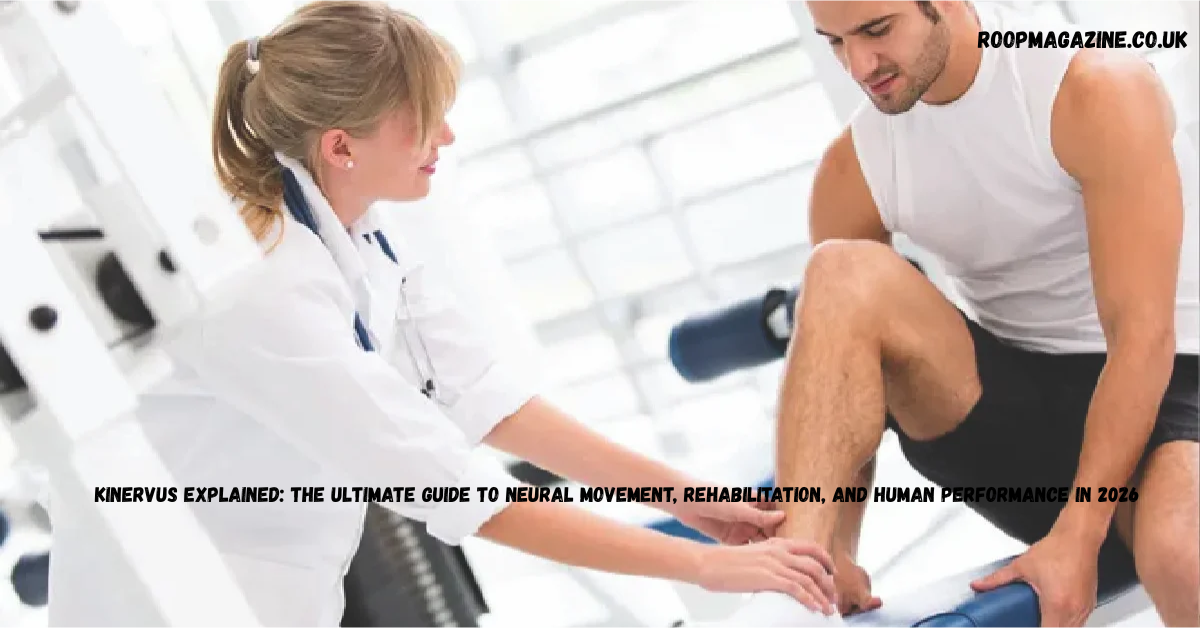
In an era where health, movement, and technology intersect, the term Kinervus is appearing across online discussions, clinical practices, and innovation spaces. Kinervus represents a powerful idea — bridging neural control, physical movement, rehabilitation science, and human-friendly interaction. It is also the name of a rehabilitation clinic in Alken, Belgium that offers specialized physiotherapy services with a patient-centered philosophy. This guide explores Kinervus conceptually and clinically, covering its principles, applications, and benefits.
What Is Kinervus? Concept, Science, and Philosophy
Kinervus is a multi-dimensional term: a concept highlighting how the nervous system and physical movement interact, and a clinical brand offering personalized rehabilitation. It combines “kinesis” (movement) with “nervus” (nerve), suggesting a focus on coordination between the nervous system and bodily movement. Motor control involves the brain, spinal cord, peripheral nerves, and muscles working together in dynamic feedback loops. Kinervus captures this interaction, emphasizing clarity, coordination, adaptability, and functional fluidity.
The Vision and Philosophy Behind Kinervus Clinic
The Kinervus clinic in Alken, Belgium, founded in 2019 by physiotherapist Stefanie Ver Eecken, is known for individualized and evidence-based rehabilitation programs. Therapists assess each patient’s physical, neurological, emotional, and daily functioning needs to design personalized plans that promote sustainable improvement. The clinic’s philosophy focuses on treating the person before the problem, emphasizing collaboration, education, motivation, and measurable progress.
How Kinervus Works: Neural Pathways and Motion
Neural Signaling and Movement
Movement begins in the brain, where instructions travel through neural pathways to muscles. Sensory feedback returns to the brain, enabling adjustments. This loop allows precise and adaptable movement.
Neuroplasticity
Neuroplasticity — the nervous system’s ability to reorganize itself — enables patients to recover function after injury or adapt movement patterns after neurological events. Kinervus therapies leverage neuroplasticity to retrain movement patterns safely and effectively.
Key Features and Principles of Kinervus
Clarity and Coordination
Movements should feel purposeful and connected. Kinervus emphasizes function over fragmentation, ensuring every movement element supports overall performance or recovery.
Adaptability
A Kinervus-aligned system adjusts with feedback, improving resilience as conditions evolve.
Balance and Flow
Kinervus supports stable progress without overload or confusion.
Specialized Neurological Rehabilitation at Kinervus
Conditions Treated
Kinervus provides targeted therapy for stroke, Parkinson’s disease, multiple sclerosis, ALS, traumatic brain injury, and spinal cord injuries.
Neuroplasticity-Driven Rehabilitation
Therapy focuses on motor relearning, task-specific training, and balance enhancement, stimulating neuroplastic changes that support functional independence and quality of life. Programs are adjusted as patients progress, ensuring maintained improvements.
Pediatric Rehabilitation: Supporting Motor Development
Early Assessment and Support
Kinervus evaluates motor milestones, posture, coordination, and balance to identify where support is needed, including delayed milestones or neurological conditions.
Play-Based, Family-Centered Approach
Therapy sessions are child-friendly, using play and exploration. Parents participate to reinforce exercises at home, creating continuity between clinical and daily environments.
Manual Lymphatic Drainage Using the Vodder Method
Kinervus specializes in manual lymphatic drainage, stimulating lymph movement to reduce fluid retention. The Vodder Method involves gentle rhythmic movements that improve circulation. It benefits patients with lymphedema or post-surgical swelling, reducing discomfort and promoting tissue health.
Musculoskeletal and Sports Rehabilitation Services
Pain Management and Functional Restoration
Therapists restore strength, flexibility, and coordinated movement while reducing pain and preventing injury. Exercises are tailored to daily activity or sports goals.
Advanced Techniques
Evidence-based modalities include manual therapy, dry needling, and taping to enhance muscle function, joint alignment, and movement quality.
Group Therapy for Neurological Patients
Strength and Social Connection
Group therapy sessions focus on strength, balance, and endurance, offering support and motivation. Patients benefit physically and emotionally.
Customizable and Inclusive
Sessions accommodate various ability levels, ensuring safety and benefit for all participants.
Kinervus in Technology and Human–Machine Interaction
The conceptual Kinervus aligns with modern physiotherapy technology. Virtual reality, wearable sensors, and AI-driven movement analysis enhance therapy by interpreting neural intent and improving movement outcomes.
Everyday Applications of Kinervus Principles
Kinervus principles are visible in smooth daily routines, learning new skills through repetition and feedback, walking or running with balanced posture, and typing or playing instruments efficiently. Understanding neural contributions to movement can improve functional habits, reduce strain, and support long-term health.
Benefits of Using Kinervus
Reduce Confusion and Stress: Clear, coordinated movement reduces tension and cognitive load.
Improve Focus and Performance: Efficient movement allows goals to be reached faster.
Build Confidence: Reliable movement fosters trust in capabilities.
In therapy, these benefits translate into improved independence and quality of life.
Common Misunderstandings About Kinervus
Misconception #1: Kinervus is only for experts — it is suitable for anyone seeking better movement, rehabilitation, or performance.
Misconception #2: Results are instant — lasting change requires practice and consistency.
Misconception #3: Kinervus is a single tool — it is a philosophy and approach adaptable to context.
How to Start Understanding and Applying Kinervus
- Observe Movement Patterns: Identify inefficiencies or tension.
- Simplify Where Possible: Remove unnecessary steps or habits.
- Practice Consistently: Regular practice strengthens neural pathways and improves outcomes.
Why Kinervus Stands Out
Kinervus bridges scientific neural movement understanding with human-centered clinical care. Its multidisciplinary approach ensures holistic support, integrating advanced knowledge with compassionate care for functional improvement and emotional confidence.
Conclusion
Kinervus is a framework for understanding brain-body coordination, whether as a conceptual philosophy or a clinical practice. It emphasizes clarity, adaptability, and long-term improvement. Kinervus offers meaningful approaches to movement, recovery, and human potential.
FAQs
Q: What is Kinervus?
A: A neural movement concept and a physiotherapy clinic offering personalized rehabilitation.
Q: Who can benefit?
A: People with neurological conditions, children with developmental needs, individuals recovering from injury, or anyone optimizing movement and performance.
Q: Do I need a doctor’s referral?
A: Typically, yes, along with identification and insurance documents.
Q: Is it suitable for children?
A: Yes, pediatric therapy is tailored to developmental needs.
Q: Where is the clinic located?
A: Alken, Belgium.