
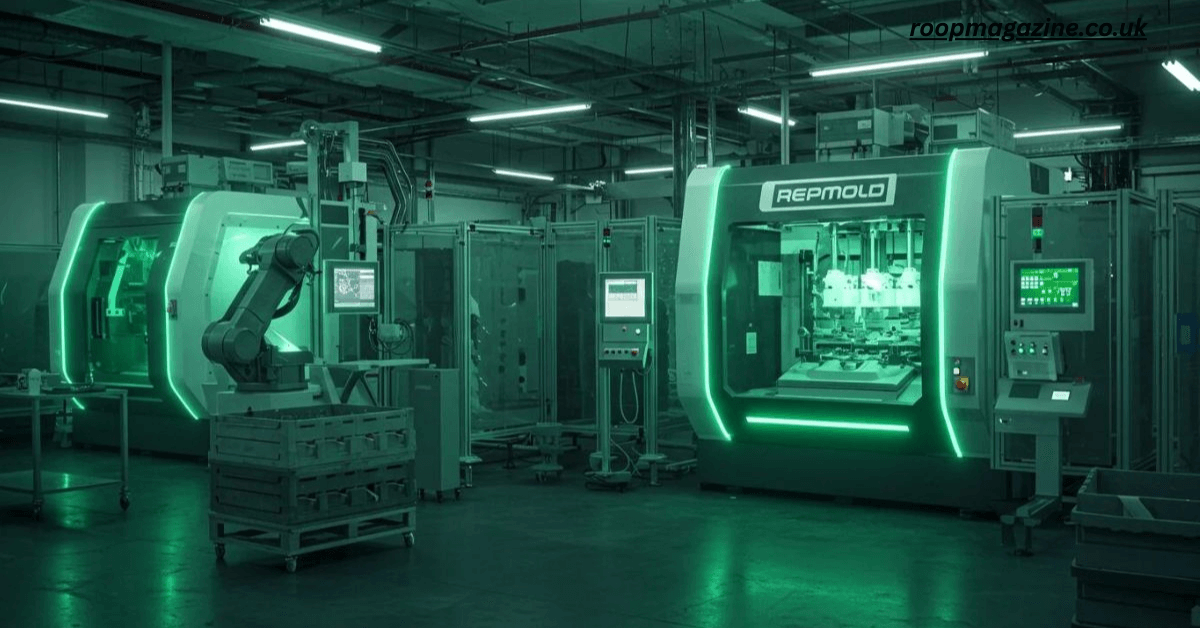
In today’s fiercely competitive manufacturing world, speed, precision, flexibility, and sustainability have become non‑negotiable. Customers and markets no longer wait months for new products — they expect rapid innovation cycles, faster delivery, and impeccable quality. Meanwhile, resource constraints, rising material costs, and environmental pressure demand waste‑efficient and energy‑smart systems.
Enter RepMold — a next‑generation mold manufacturing methodology that promises to transform how molds are designed, validated, and produced. By integrating digital design, rapid prototyping, automated replication, and smart production workflows, RepMold offers a path toward faster time‑to‑market, consistent quality, reduced waste, and design flexibility. For manufacturers aiming to stay agile, competitive, and future‑ready, RepMold could be the game‑changer.
In this comprehensive guide, we dive deep into what RepMold is (and what it might mean), why it matters, how it works, where it’s applied — and what challenges and opportunities lie ahead.
What is RepMold?
At its core, RepMold refers to a modern mold production methodology — not a single machine, but a combination of digital design, rapid prototyping, replication techniques, and automated mold manufacturing, used to create molds quickly, with high precision, and in a flexible, cost‑effective manner.
Unlike traditional mold‑making — which often involves manual craftsmanship, iterative tooling, long lead times, and high upfront costs — RepMold aims to compress the timeline from concept to production, minimize waste, and deliver molds (and therefore products) that meet strict tolerances and quality standards.
Key aspects that define RepMold:
- Use of digital design tools (CAD/CAM) to model parts/molds virtually — enabling design optimization, simulation, and rapid iteration before physical molds are built.
- Use of rapid prototyping technologies (e.g. 3D printing, CNC machining, laser sintering) to create prototype molds, master patterns, or even final mold inserts more quickly than traditional steel mold machining.
- Replication and scaling — once a master mold or prototype is validated, RepMold supports replicating molds for production, including small to medium production runs, with consistent quality.
- Integration of automation, smart manufacturing, and (where applicable) data-driven monitoring/quality control, potentially facilitating IoT‑enabled or AI‑enhanced mold production workflows.
Because of this hybrid nature (digital + prototyping + automation + replication), RepMold stands as an evolution — arguably a revolution — in mold manufacturing: aiming to meet modern demands of agility, precision, sustainability, and cost efficiency.
Why RepMold Matters in Today’s Manufacturing Landscape
Modern manufacturing doesn’t tolerate inefficiency. Several important trends and pressures make technologies like RepMold increasingly crucial:
- Demand for faster time-to-market: Product life-cycles are shortening; companies that can’t respond quickly risk falling behind. By reducing design-to-production timelines, RepMold helps companies stay competitive.
- Need for precision and consistency: Industries like automotive, aerospace, medical devices, and consumer electronics demand high precision molds and tight tolerances — often beyond what manual mold making can efficiently deliver. RepMold’s digital design and automated replication support that demand.
- Cost pressure and material waste concerns: Traditional mold making — especially with steel molds and multiple iterations — is expensive and wasteful. RepMold’s efficiency, reduced material waste, and lower labor needs help reduce costs and environmental impact.
- Flexibility and customization demand: Modern markets increasingly favor customizable products, short production runs, frequent design changes. Traditional mold-making cannot adapt quickly or economically to such variability. RepMold’s flexibility supports rapid design changes, small-batch runs, and custom molds.
- Sustainability and environmental responsibility: With increasing regulatory and consumer pressure for “greener” manufacturing, reducing material waste, energy consumption, and adopting efficient workflows are essential. RepMold aligns with these goals.
In short: RepMold addresses multiple pain points simultaneously — speed, quality, cost, flexibility, and sustainability — making it highly relevant for present and future manufacturing demands.
The Evolution of Mold Production
Challenges with Traditional Mold‑Making
Before technologies like RepMold, mold-making was largely manual, labor-intensive, and time-consuming:
- Long lead times & high costs: Designing a mold, machining steel or aluminum, testing, making corrections — all steps could take weeks, sometimes months. High tooling cost discouraged small-batch or custom products.
- Limited design complexity: Complex geometries, intricate internal structures, undercuts or thin walls were challenging or impossible to achieve with conventional machining or casting.
- Iterative cycles and waste: Any design change meant going back to re-machine the mold — costly, slow, and wasteful in terms of materials and time.
- Inconsistent quality: Manual processes and human error could lead to inconsistencies, defects, rework, and higher scrap rates.
These constraints made traditional mold manufacturing poorly suited for fast-moving markets or highly customized product demands.
The Shift to Automation, CAD, and Smart Manufacturing
As digital technologies matured — CAD/CAM design software, CNC machining, 3D printing, laser sintering, automated inspection — mold-making began to transform. These advancements enabled:
- Rapid prototyping: Designers could iterate quickly in digital space, simulate performance, then 3‑D print or machine physical prototype molds for testing — reducing design cycles dramatically.
- High‑precision machining / additive manufacturing: With CNC machining, laser EDM, selective laser sintering (SLS) or direct metal laser sintering (DMLS), manufacturers could produce mold inserts or master patterns with fine detail, micron-level tolerances, and complex geometries that traditional carve‑out methods couldn’t.
- Automation & Smart Factories (Industry 4.0): Connecting injection molding or mold-making machines with sensors, data analytics, even AI/ML or IoT allows real-time monitoring, predictive maintenance, optimized workflows — reducing waste, improving quality, boosting efficiency.
These transformations laid the foundation for what we now conceptualize as RepMold — combining the best of digital design, rapid prototyping, automated replication, and smart manufacturing into a unified methodology.
Key Features of RepMold
Here’s a breakdown of the core features that make RepMold stand out:
Micron‑Level Precision for Perfect Fit
Because mold design and mold tooling can be digitally modeled via CAD/CAM and constructed via high-precision additive or subtractive manufacturing, RepMold can deliver molds with tight tolerances and detailed geometries. This is especially vital for industries like aerospace, medical devices, and electronics — where even small deviations can cause failures.
Ultra‑Fine Surface Finish Capabilities
Advanced molding technologies (e.g. laser sintering, EDM, polished mold inserts) allow for very smooth surface finishes, reducing the need for extensive post-processing. That means the final products come out cleaner, more consistent, and closer to final-spec from the first shot.
Rapid Production Speed: From Weeks to Days/Hours
One of the major breakthroughs of RepMold is the significant reduction in lead times. What might take weeks or months in traditional mold making — designing, machining, testing, adjustments — can be compressed into days (or even hours in rapid‑prototyping + replication workflows).
This speed supports faster prototyping, quicker market launches, and more responsive iteration cycles when product design changes.
Flexibility for Complex Geometries and Customization
Because molds are digitally designed and can be produced through additive manufacturing or flexible machining methods, RepMold allows tackling complex geometries, internal structures, thin walls, undercuts, multi‑component assemblies, or other intricate design features that would be costly or impossible with traditional tooling.
Moreover, design changes or new product variants can be implemented relatively quickly — avoiding long downtimes or expensive re-tooling.
Adaptability Across Industries & Materials
RepMold isn’t limited to a single sector. Its versatility makes it suitable for a wide range of industries: automotive parts, aerospace components, consumer electronics housings, medical devices, packaging, and more. The method supports different materials (plastics, metals, composites) depending on application.
This adaptability gives manufacturers the ability to standardize mold production workflows even while producing diverse types of products.
How RepMold Works — The Workflow
While implementations may vary, a typical RepMold workflow might look like this:
- Advanced 3D Digital Modeling — Engineers create detailed CAD models of the product (or mold cavity), simulate stresses, thermal behavior, fill times, deformation, and optimize geometry before committing to any physical tooling. This digital validation helps catch design issues early.
- Rapid Prototyping / Master Pattern Creation — Using technologies such as 3D printing (SLA, SLS, DMLS) or high-precision CNC machining, a prototype mold insert or master pattern is produced quickly. These prototypes can be used for testing, fit-checking, and design validation before full-scale production.
- Replication / Tooling Production — Once the prototype/master mold is approved, multiple production-ready molds are fabricated (metal or composite), often using additive or subtractive techniques optimized for durability and repeatability. RepMold’s replication process aims to maintain high precision and consistency across all molds.
- Production Scaling — Molds are utilized for short, medium, or even larger production runs, depending on demand. Because molds are built precisely and consistently, the produced parts meet quality standards, reducing scrap, rework, and defects.
- Quality Control & Feedback Loop — Modern implementations may integrate sensors, IoT devices, and maintenance analytics. Process data (temperature, pressure, cycle time, material usage, energy consumption, etc.) can be collected in real time, enabling adjustments, predictive maintenance, and continuous improvement.
- Iteration & Optimization — If design changes are required (e.g. redesigning a product or adjusting for a new variant), engineers can return to the CAD model, modify, re‑prototype, validate, and replicate — all faster than traditional retooling cycles.
Through this workflow, RepMold brings together the best of digital design, rapid prototyping, automated tool production, and smart manufacturing — offering a streamlined, flexible, and high‑quality mold production pipeline.
Advantages of Using RepMold in Production
Here’s a summary of the major advantages — and why many manufacturers are increasingly considering RepMold as a strategic investment.
Faster Prototyping and Product Launch
Because RepMold drastically reduces mold development and validation times (from weeks/months to days), companies can test product designs quickly, iterate, launch faster, and respond to market demands with agility. This speed gives a competitive advantage in fast-moving markets (consumer electronics, consumer goods, fashion‑related products, etc.).
Cost Savings Through Reduced Waste & Labor
By minimizing manual labor, reducing the number of physical prototypes, and cutting down on material waste, RepMold can lower overall production costs significantly. Less rework, fewer defects, and efficient material usage all contribute to better bottom lines.
Additionally, lower cost per mold (compared to traditional steel molds) and ability to support small-to-medium production runs opens opportunities for small-batch production or customization, which were previously economically infeasible.
Improved Product Consistency and Quality Assurance
Automated, digitally controlled design and production — along with high‑precision manufacturing — ensures each mold (and thereby each produced part) adheres to exact specifications. This consistency reduces defects and increases reliability.
Enhanced Operational Flexibility & Design Freedom
RepMold supports complex geometries, rapid design changes, and custom molds — enabling companies to innovate in product design and adapt quickly to market changes. This agility can lead to better product differentiation, customized offerings, and quicker iteration cycles.
Environmentally Sustainable Manufacturing Practices
By reducing material waste, lowering energy consumption (through efficient processes and possibly fewer machine hours), and enabling smaller batch runs (thereby reducing overproduction), RepMold aligns with environmental and sustainability goals. TDL+2sc-rapidmanufacturing.com+2
In a world where consumers and regulators increasingly demand green manufacturing, RepMold offers a path toward more sustainable mold production.
Applications Across Industries
RepMold’s versatility means it can be applied across many sectors. Here are some of the most promising and impactful uses:
Automotive Components
Automotive manufacturing often requires complex, precise, and durable components — from interior plastics to structural elements. RepMold can produce molds for lightweight plastic parts, interior panels, housings, or even small metal/plastic hybrid components, enabling faster design cycles, lighter parts (a key concern in modern fuel‑efficient or EV vehicles), and rapid iteration in prototyping or secondary part production.
Aerospace Engineering
Aerospace demands high precision, lightweight parts, complex geometries, and strict quality control. Using RepMold, aerospace manufacturers can produce specialized molds for composite components, metal or plastic parts with tight tolerances, or lightweight structural parts — while reducing lead times and enabling rapid design iteration for customized parts.
Consumer Electronics & Consumer Goods
Rapid product cycles, frequent redesigns, and demand for sleek, precise housings and components make consumer electronics a prime candidate for RepMold. Molds for smartphone cases, headphone housings, plastic frames, small parts — all can be prototyped and produced faster, enabling faster product launches and quicker iteration.
Medical & Healthcare Devices
Medical devices often require high precision, strict tolerances, reliable reproducibility, and fast response to design changes (e.g. regulatory updates). RepMold’s precise, consistent mold production supports production of surgical instrument components, sterile housings, small plastic parts, and prototype medical devices — with the ability to iterate quickly and maintain high quality.
Packaging Industry & Specialized Plastic Parts
For packaging, short-run runs, or items with frequent design updates (e.g. seasonal products, customized packaging), RepMold provides lower-cost molds, flexibility for small-to-medium batches, and ability to adapt designs rapidly — reducing time-to-market and waste associated with overproduction.
In essence, any industry that requires molds — whether for plastic, metal, composite, or hybrid parts — can potentially benefit from RepMold, especially when time‑to‑market, flexibility, precision, or cost‑efficiency are critical.
Real‑World Case Studies and Reported Successes
While “RepMold” as a standardized, globally adopted methodology remains rare in public literature, there are documented benefits and trends from advanced mold manufacturing and rapid molding solutions that mirror RepMold’s promises. Below are illustrative examples / reference cases from the broader modern molding industry (which RepMold builds upon).
- Rapid Molding Cutting Lead Times: According to one source, techniques combining rapid prototyping and mold making reduced mold-development times from weeks/months to just a few days — enabling companies to accelerate product launches significantly.
- Cost Reduction and Waste Minimization: Use of efficient materials, less rework, and fewer prototypes have reduced overall production costs and material waste — benefits touted by proponents of RepMold‑style manufacturing.
- Consistent Quality for High-Precision Applications: Advanced mold manufacturing (via CNC, EDM, additive manufacturing) delivers molds that meet tight tolerances and complex geometry requirements — important for industries like medical, aerospace, and precision electronics.
- Flexibility & Customization for Small or Medium Batches: Compared to traditional steel molds (which are expensive and economical only for high-volume production), modern rapid mold methods allow cost‑effective small-to-medium runs — enabling niche, customized, or short-lifecycle products.
- Sustainability Trends in Smart Factories & Molding: With rising focus on sustainability, many experts advocate advanced mold manufacturing and Industry 4.0–enabled molding (automation, sensor-driven processes, efficient material usage) as key to green manufacturing.
These success stories — whether from rapid injection molding, additive mold manufacturing, or smart factory implementations — validate many of the advantages that RepMold theoretically offers, and suggest that a well‑implemented RepMold strategy can yield tangible benefits in industrial settings.
Challenges in Implementing RepMold
As promising as RepMold sounds, implementing it is not without hurdles. Manufacturers must carefully consider the following challenges and trade‑offs.
Initial Investment and Technology Costs
Transitioning to a RepMold workflow often requires investment in CAD/CAM software, prototyping equipment (3D printers, CNC machines), advanced materials for mold inserts, and possibly automation/IoT infrastructure. For small firms or plants with limited capital, this upfront cost might be a barrier. This mirrors the known drawback of rapid injection molding: tooling and setup costs can be high, especially for low-volume production.
Need for Skilled Workforce and Training
Advanced mold design, CAD modeling, prototyping, and smart manufacturing demand skilled engineers, programmers, and technicians familiar with digital workflows, simulation, quality control, and possibly data analytics (if IoT / smart manufacturing is involved). The learning curve can be steep, and retraining staff or hiring new skilled personnel adds cost and complexity.
Supply Chain and Material Sourcing for Specialized Molds
RepMold’s effectiveness may depend on availability of suitable materials (for additive metal molds, high‑performance resins or composites, durable inserts) — plus reliable supply chains for these materials. Delays or shortages may hinder timely production.
Resistance to Organizational Change
As with any transformative technology, internal resistance — from management skepticism to workers used to traditional processes — can slow adoption. Convincing stakeholders to invest in new workflows, retraining, and potentially overhaul legacy processes requires strong leadership, clear ROI demonstration, and culture shift.
Limitations in Scaling for Very High‑Volume Production
While RepMold works well for rapid prototyping, small-to-medium runs, and flexible production, for extremely high-volume, long-term production runs, traditional high-end steel molds (carefully engineered for durability over hundreds of thousands or millions of cycles) may still hold advantage — especially when per-part cost must be minimized over massive scale.
Quality Control & Process Integration Complexity
If a RepMold workflow involves IoT, sensors, automation, or smart manufacturing, integrating different systems (machines, data platforms, maintenance systems) can be technically complex. Ensuring data interoperability, avoiding downtime, and managing maintenance of more sophisticated equipment adds new operational challenges.
Future Potential and Growth of RepMold and Related Technologies
Looking ahead, RepMold — or more broadly, advanced mold manufacturing techniques combining digital design, rapid prototyping, automation, and smart manufacturing — are likely to gain increasing importance, driven by several trends:
Integration with Industry 4.0 and Smart Factories
As factories adopt IoT, real-time monitoring, data analytics, and AI-driven control systems, mold production and injection molding will become more intelligent, adaptive, responsive. RepMold fits well into this paradigm: digital design + automated tooling + data-driven quality control. Studies and industry reports suggest increasing adoption: many manufacturers expect smart factories to transform production in the next few years.
Such integration could lead to self‑optimizing mold production lines, predictive maintenance of molds and machinery, real-time parameter adjustments, and better resource utilization — increasing productivity, reducing downtime, and cutting waste.
Advancements in Materials — Sustainable, Recycled, or Bio‑Based Resins & Composites
As industries shift toward sustainability, demand for molds and parts made from recycled or bio-based materials will grow. Advanced mold manufacturing (like RepMold) can support these materials — with iterative prototyping, quick adaptation, and flexible tooling — making it easier to test and adopt new material types without long lead times.
These developments support circular‑economy practices (recycling waste, reducing virgin material use), lower carbon footprints, and more environmentally friendly production — aligning with global sustainability goals.
More Widespread Adoption of Rapid Mold Manufacturing for Small-to-Medium Batches & Custom Products
With consumer demand shifting toward customization, limited edition products, and fast design cycles (especially in electronics, consumer goods, fashion, medical devices), there will be increasing demand for flexible production methods. RepMold enables economic small-to-medium batch runs and design variation — so adoption for niche products or customized items is likely to increase.
AI / Machine Learning–Driven Process Optimization & Virtual Testing
Emerging research shows the potential of AI/ML to optimize molding processes — e.g., dynamic parameter optimization to balance quality and profitability in injection molding under varying economic or environmental conditions.
Moreover, virtual‑reality (VR) and digital‑twin environments are being explored for mold design validation, enabling complex mold designs to be scrutinized virtually before physical production — reducing errors and speeding up development cycles.
As these technologies mature, RepMold workflows could become more intelligent, data-driven, and efficient — further reducing waste, cost, and lead times.
Conclusion
RepMold — as a concept blending digital design, rapid prototyping, automated mold production, and smart manufacturing — represents a major step forward in mold-making and manufacturing at large. It addresses many of the core pain points of traditional molding: long lead times, high costs, waste, limited flexibility, and inconsistent quality.
For manufacturers willing to invest in modern tooling, digital infrastructure, and staff training, RepMold can offer faster time‑to‑market, cost savings, superior quality, design flexibility, and sustainable practices, all of which are increasingly critical in today’s dynamic industrial landscape.
At the same time, the path to adopting RepMold is not without challenges: initial investment costs, skill requirements, supply chain dependencies, and organizational resistance can hinder transition. For very large-scale, high-volume production, traditional high‑durability steel molds may still have their place.
Still — given the trajectories of Industry 4.0, rising demand for customization, sustainability, and rapid innovation — RepMold (or similar advanced mold manufacturing methodologies) is well positioned to become a cornerstone of modern manufacturing.
If adopted strategically, it can give companies a competitive edge, faster innovation cycles, and a more sustainable, flexible production backbone for the future.
Notes & Caveats
- Public sources about “RepMold” as a standardized, widely adopted industry methodology remain limited. The term seems used by a few firms or websites to describe rapid / advanced mold manufacturing + replication processes. Therefore, readers should treat “RepMold” as a conceptual method rather than a universally established standard — and verify with vendors/manufacturers when evaluating implementations.
- Data on cycle times, cost savings, waste reduction, etc., often come from general studies of rapid molding, additive mold manufacturing, or smart injection molding — not always labeled “RepMold.” Wherever specific numbers are cited, they refer to analogous modern molding technologies (e.g. rapid injection molding, 3D‑printed molds, CNC machined molds), which RepMold claims to integrate.
- As with any advanced manufacturing: success depends heavily on implementation — materials, equipment, workflows, skilled personnel, and adherence to quality control